
What if resisting injustice could also become a practice of collective healing? Kazu Haga joins Phoenix Soleil to explore restorative justice, nonviolence, and fierce vulnerability.
The Transformative Power of Restorative Justice (w/ Malachi Scott)
Restorative justice is about creating the conditions for healing for everyone affected by harm. Few people understand that more personally than Malachi Scott, whose life was transformed by restorative justice while he was incarcerated.
Building Stronger Communities Through Restorative Justice (w/ David Yusem)
How can we create communities where conflict becomes an opportunity for healing instead of punishment? Today, David Yusem joins us to explore the transformative potential of restorative justice.
Building a Functional Society Through Restorative Justice (w/ Gerald Partridge)
Next Economy Now is a weekly social impact podcast sharing stories & dialogue from the front lines of the new economy. Subscribe on Apple Podcasts, Spotify, Pandora, YouTube, or wherever you find your podcasts.
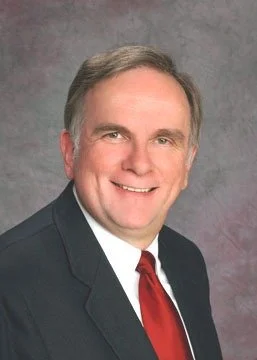
Can you imagine the kind of healing and reconciliation that could be possible in society if Restorative Justice were used as an alternative to traditional criminal justice? Gerald Partridge joins us today to explore the power and value of Restorative Justice in building a civilized society. Gerald is a retired career prosecutor who has used Restorative Justice throughout his career to solve sensitive and complex criminal cases. Justice has always been important to Gerald, and when he discovered Restorative Justice, he knew it was the best way forward for society.
In this conversation, Phoenix and Gerald discuss the “bad fruit” being produced by the traditional criminal justice system, how Restorative Justice fills the gaps that system creates, exactly how the process works, why victims want to participate in this process, the benefits of reconciliation, and more. Gerald goes on to break down the three questions that make up a Restorative Justice conference before discussing how listeners can learn more about Restorative Justice and what we can do to support this reformative system.
Finally, our guest shares some real-life instances where Restorative Justice has transformed lives. If you want to hear all this and learn how Restorative Justice changes the “us versus them” narrative into a sense of unity among people, be sure to press play now.
—-
What You’ll Learn:
Discover the issues Restorative Justice addresses that traditional criminal justice ignores. [0:05:35]
Learn how the Restorative Justice system works, step-by-step, and why victims of crime participate. [0:12:46]
Explore the three questions that make up the Restorative Justice conference. [0:33:59]
Hear about how you can get involved in supporting the Restorative Justice system. [0:40:19]
---
Memorable Quotations:
“If you’re going to build a civilization and a society, Restorative Justice really should be the cornerstone.” — Gerald Partridge [0:05:05]
“The criminal justice system is, ‘Nail them, jail them. You do the crime, you do the time, you get what you deserve,’ and Restorative Justice does it better.” — Gerald Partridge [0:11:09]
“When you give people the opportunity to be human beings, sometimes, they really are.” — Gerald Partridge [0:30:07]
---
Links Mentioned in Today’s Episode:
Sign up for Gerald Partridge’s Webinar – One Giant Leap for Criminal Justice Reform: https://one-giant-leap-for-criminal-justice.mailchimpsites.com/
Gerald Partridge – Email Address: [email protected]
---
Explore More from LIFT Economy:
Explore other episodes in this series on restorative justice https://www.lifteconomy.com/restorative-justice-series/
Phoenix Soleil – Website: https://www.phoenixsoleil.com/
Phoenix Soleil – LinkedIn: https://www.linkedin.com/in/phoenix-soleil-68b4431/
Subscribe to Next Economy Now wherever you get your podcasts:
Apple Podcasts: https://podcasts.apple.com/us/podcast/next-economy-now-for-the-benefit-of-all-life/id1074584017
Spotify: https://open.spotify.com/show/36p6xgHCr8BY9jZyIaQPYB
YouTube: https://youtube.com/c/Lifteconomy
Stay connected with the LIFT Economy team for more conversations and resources on building an economy that works for all life:
Newsletter: https://lifteconomy.com/newsletter
Next Economy MBA: https://lifteconomy.com/mba
Restorative Justice and the Work of Repair (w/ Tatiana Chaterji)

Photo Credit: Valarie Duran
What would it take to move beyond punishment and toward true accountability and healing? In this episode of Next Economy Now, restorative justice (RJ) practitioner Tatiana Chaterji shares her journey as a survivor, educator, and advocate working to create alternatives to the punitive systems that dominate today’s responses to harm. With over a decade of experience in education, prisons, and community organizing, Tatiana is helping shape a vision of justice rooted in collective care and systemic transformation.
Tatiana explains how restorative justice practices, with roots in Indigenous traditions, create space for truth-telling, accountability, and healing. She shares her personal story of surviving a violent crime and how participating in surrogate victim-offender dialogues helped her find connection and deeper healing. The episode also explores how restorative practices can support social-emotional learning in schools and help address structural harm in organizations and communities.
This conversation offers a powerful look at how restorative justice can help build a society rooted in accountability and healing. Listen in to learn how restorative justice can help build a world that supports safety, dignity, and wholeness for all.
Key Points From This Episode:
Introducing Tatiana Chaterji, restorative justice (RJ) work, and RJ’s Indigenous roots. [0:01:03]
Critiquing the prison system and how to build a justice model that recognizes both harm and the humanity of all involved. [0:10:48]
Tatiana’s story of surviving a violent hit-and-run and traumatic injury, and how the police failed to investigate and dismissed her case. [0:14:05]
The process of taking part in surrogate victim-offender dialogues and how it helped Tatiana find closure and heal. [0:22:54]
Unpacking the sincerity and rigor of restorative work, even inside prisons. [0:33:36]
Why we should be working towards a society without prisons. [0:37:21]
Details of the book Tatiana is working on for restorative justice work in schools. [0:38:32]
Why true accountability requires support, not just punishment or permissiveness. [0:39:55]
RJ approaches to addressing sexual harm in schools and workplaces. [0:45:25]
Where you can find Tatiana online and what to expect from her upcoming book. [0:48:39]
Quotes:
“Restorative justice is a set of practices that challenges us to move from our authentic selves. We can locate some of the origins in indigenous peacemaking.” — Tatiana Chaterji [0:03:08]
“A lot of the Native people who have held these traditions have been erased from the conversation, and I think it's really important to be accountable for that when it comes to the Indigenous origins [of] what people call Native peacemaking processes.” — Tatiana Chaterji [0:03:40]
“I would say that most people who are serving time, serving a criminal sentence, or are on probation, or in other ways surveilled or detained by the state, that these individuals are also harmed in some way.” — Tatiana Chaterji [0:11:04]
“In the case of the offenders or the people who caused harm, they only do this [process of victim-offender dialogue] after a year or longer of preparation. They go through [an] intensive curriculum and exercises to understand what happened and how this has happened.” — Tatiana Chaterji [0:25:37]
“If you think about our criminal legal system, you are discouraged from taking responsibility, even if you know that you did it, even if you believe that it would make it better if you admitted it, you are discouraged.” — Tatiana Chaterji [0:26:40]
Links Mentioned in Today’s Episode:
Tatiana Chaterji: https://www.tatianachaterji.com/
Tatiana Chaterji on LinkedIn: https://www.linkedin.com/in/tatianachaterji/
Partners for Collaborative Change: https://www.collabchange.org/
Restorative Justice for Oakland Youth: https://rjoyoakland.org/
MEND Collaborative: https://mendcollaborative.org/
Insight Prison Project: http://www.insightprisonproject.org/
Phoenix Soleil: https://phoenixsoleil.mystrikingly.com/
Phoenix Soleil on LinkedIn: https://www.linkedin.com/in/phoenix-soleil-68b4431/
Centre for Non-Violent Communication: https://www.cnvc.org/
More on Surrogate Repair:
Surrogate repair is a strategy within restorative justice where people who have not directly harmed or been harmed by each other. It happens when either the survivor or the offender is not available, ready, or willing to participate in meeting directly with the other party.
Read a description of this process from the MEND Collaborative, a trusted organization that facilitates this crucial work with incarcerated people and survivors of violence and crime. https://mendcollaborative.org/surrogate-restorative-justice-circles-and-survivor-support/
Tatiana wrote a piece of creative nonfiction capturing her experience with surrogate victim offender dialogue here: https://brightflash1000.com/2025/10/03/split/
Explore other episodes in this series on restorative justice: https://www.lifteconomy.com/restorative-justice-series/
Stay Connected To Next Economy News with our Newsletter!
Interested in receiving the latest news from the Next Economy? Sign up for our newsletter and receive monthly tips, advice, and resources from our team and partners:https://lifteconomy.com/newsletter