Last month I was at the book launch for Incorruptible by Eric Ries (which recently hit the NYT bestseller list). Eric's main argument is that companies that want to be trusted need structural accountability, not just good intentions. He recommends the Public Benefit Corporation as the single most important step any company can take.
B Corps did not come up in any of the discussion. So I asked Eric afterwards how much B Corp certification had come up on his book tour and media appearances. His response was candid: barely at all, which surprised even him.
Why B Corp is Missing
I wasn't surprised. Eric's audience is heavily tech and startup focused. I have done talks in Silicon Valley many times, including events, founder conversations, and lectures at Stanford's business school. The reaction was almost always a blank stare or mild curiosity. At Eric's event, an attendee put it bluntly: "The Venn diagrams of the two worlds do not overlap." I think that's slightly overstated. But it's basically true.
“The Venn diagrams of the two worlds do not overlap.”
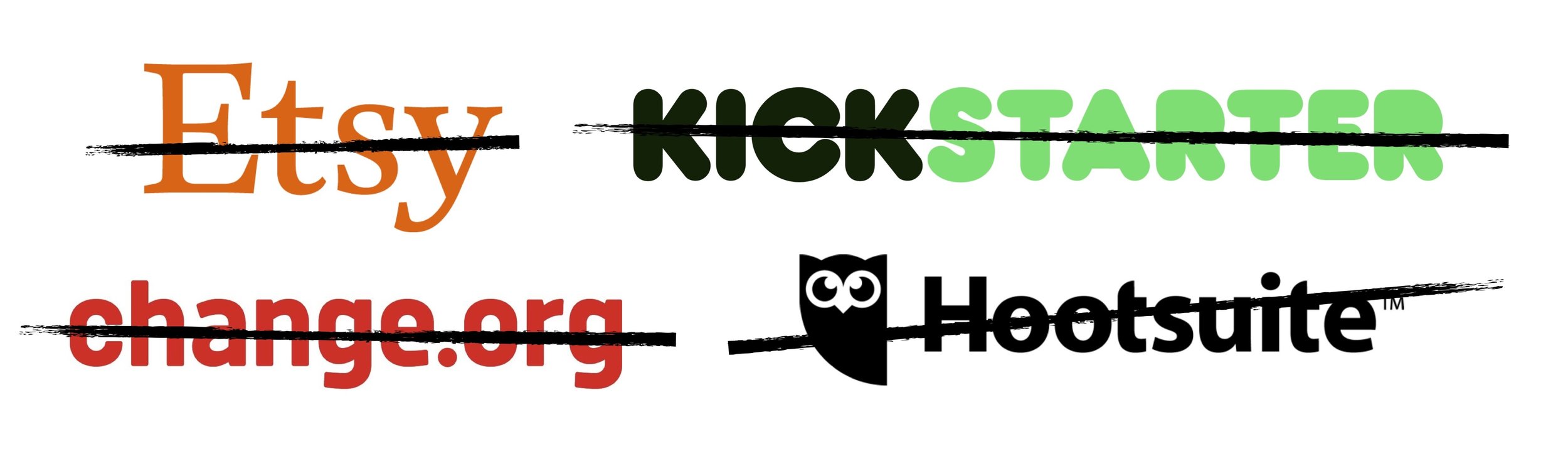
I am now working on the third edition of The B Corp Handbook, so I went looking for big-name tech B Corps. There have been several in the past: Kickstarter, Etsy, Change.org, Hootsuite, WeTransfer, and Rally Software. But none of these are certified anymore. I know there are some--like CultureAmp and Coursera--that are current B Corps. But there are now almost 11,000 B Corps across the world, and it feels like the proportion of big-name tech B Corps has gotten even smaller. What's actually going on?
The High Growth, Silicon Valley Playbook
My take is that the traditional Silicon Valley playbook doesn't leave room for it. The VC playbook demands that companies be "N of 1" innovative disruptors that turn entire industries upside down. But then those same VCs want the most basic, traditional legal and corporate governance possible: the Delaware C Corp. Entrepreneurs are told by their lawyers, investors, and advisors to not mess with how their company is structured or they will struggle to attract top-tier investors. Scale first, figure out everything else later.
For a long time, the legal structure requirement for B Corp certification was a real barrier for companies on an IPO track. Warby Parker and Etsy were both B Corps, but decertified before their respective IPOs because they couldn't (or didn't want to) convert to a PBC (Warby Parker later made the conversion and is currently a B Corp). But the "fear of the PBC" excuse has expired. Anthropic and OpenAI have raised hundreds of billions of dollars in a Public Benefit Corporation structure. More than 60 publicly traded companies around the globe are PBCs. The argument that a PBC makes you uninvestable is not supported by current evidence.
Why Tech Companies Should Reconsider
Here's what I would say to tech companies that are on the fence about certifying: you should definitely do the PBC. But you should also do B Corp certification. The PBC alone is mission lock without accountability. It tells the world you intend to consider stakeholders, but it doesn't verify that you're actually doing it. Doing both the legal mission lock and the independently verified operational standards creates a system of aligned incentives that makes you more resilient. The verification is what makes the mission credible.
Consumer trust in tech companies is arguably at an all-time low. Third-party verified accountability, which is exactly what B Corp provides, is precisely the kind of credible signal that could rebuild it.
Twenty years in, the tech world and the B Corp movement barely overlap. Let's change that.
Questions? Curious to learn more?
You can also contact us directly by filling out the form below: