Next Economy Now is a weekly social impact podcast sharing stories & dialogue from the front lines of the new economy. Subscribe on Apple Podcasts, Spotify, Pandora, YouTube, or wherever you find your podcasts.
What if perpetual economic growth is part of the problem, not the solution? Feroz Khan explores how degrowth and disaster justice could guide a more sustainable and equitable future.
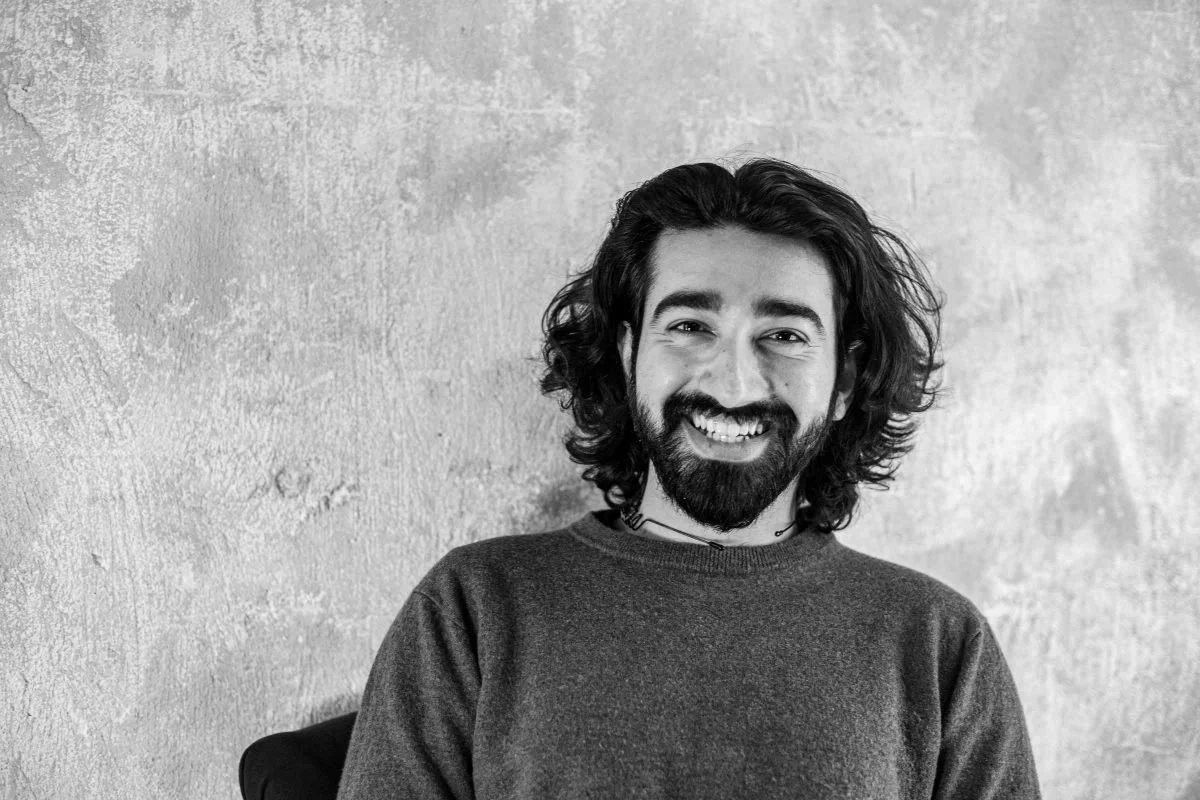
Feroz Khan, doctoral researcher at ICTA UAB, joins us to explore the intersections of degrowth, disasters, and development. His work examines disaster justice, maladaptation, and reparations, providing critical alternatives to mainstream ideas. In this conversation, Feroz shares insights into creating a more sustainable and equitable society, highlighting how human decisions shape disaster risk.
Feroz Khan’s research on post-growth disaster strategies examines how similar natural hazards can have vastly different impacts, as in Haiti’s earthquakes, and how human-made conditions amplify risk. He explores the paradox of growth, showing how society’s attachment to perpetual economic expansion can increase vulnerability, while emphasizing that shifting, rather than simply reducing consumption, is key to resilience and equity. Feroz also introduces human-centred urbanism, reflecting on decolonization, extractive economic patterns, and lessons from “blue zones,” illustrating how integrating these insights into post-growth strategies can guide the creation of a more sustainable and equitable society for all.
- - -
What You’ll Learn:
Learn how Feroz is developing an evidence base to support a post-growth disaster strategy. [0:01:03]
Understand how degrowth is essential to addressing disaster risk reduction and the climate crisis. [0:08:39]
Explore the paradox of a need for growth and the problem of unending growth rates. [0:14:10]
Balance the belief that the right crisis will activate much-needed change with debilitating attitudes of cynicism. [0:20:19]
Be introduced to human-centred urbanism through space and practices. [0:32:16]
Hear how Feroz plans to further his research in Valencia and beyond. [0:47:03]
---
Memorable Quotations:
“Disasters are not made by nature. It’s human acts and human choices that create the maps of vulnerabilities and create the baseline conditions that make things go disastrous.” — @khanslate [0:06:32]
“What if [a project took] seriously that we need to converge the standards between parts of the world that are over-consuming and parts of the world that are not consuming enough?” — @khanslate [0:11:21]
“Natural hazards and navigating them [is] a part of the human condition, but what is unique about living in this late stage of capitalism is we’ve wedded ourselves to [a] growth machine.” — @khanslate [0:16:23]
-—
Links Mentioned in Today’s Episode:
Feroz Khan — LinkedIn: https://www.linkedin.com/in/feroz-m-khan/
Feroz Khan — X: https://x.com/khanslate
The REAL Project — Website: https://www.realpostgrowth.eu/
The REAL Project — LinkedIn: https://www.linkedin.com/company/real-post-growth/posts/
Mike Davis – Book Link: https://www.powells.com/book/ecology-of-fear-los-angeles-the-imagination-of-disaster-9780805051063
Giorgos Kallis — Book Link: https://bookshop.org/p/books/limits-why-malthus-was-wrong-and-why-environmentalists-should-care-giorgos-kallis/323441fa62531b76
Vincent Bevins — Book Link: https://www.powells.com/book/jakarta-method-washingtons-anticommunist-crusade-the-mass-murder-program-that-shaped-our-world-9781541724006
Explore More from LIFT Economy:
Subscribe to Next Economy Now wherever you get your podcasts:
Apple Podcasts: https://podcasts.apple.com/us/podcast/next-economy-now-for-the-benefit-of-all-life/id1074584017
Spotify: https://open.spotify.com/show/36p6xgHCr8BY9jZyIaQPYB
YouTube: https://youtube.com/c/Lifteconomy
Stay connected with the LIFT Economy team for more conversations and resources on building an economy that works for all life:
Newsletter: https://lifteconomy.com/newsletter
Next Economy MBA: https://lifteconomy.com/mba